- Blue Church Book
- Posts
- Why Modern Self-Care Is Failing Christians in 2026
Why Modern Self-Care Is Failing Christians in 2026
(And What the Church Knew Long Before Has Been Forgotten)

Jerome Chandler
January 14, 2026
In partnership with

Not Conservative. Not Liberal. Just Christian.
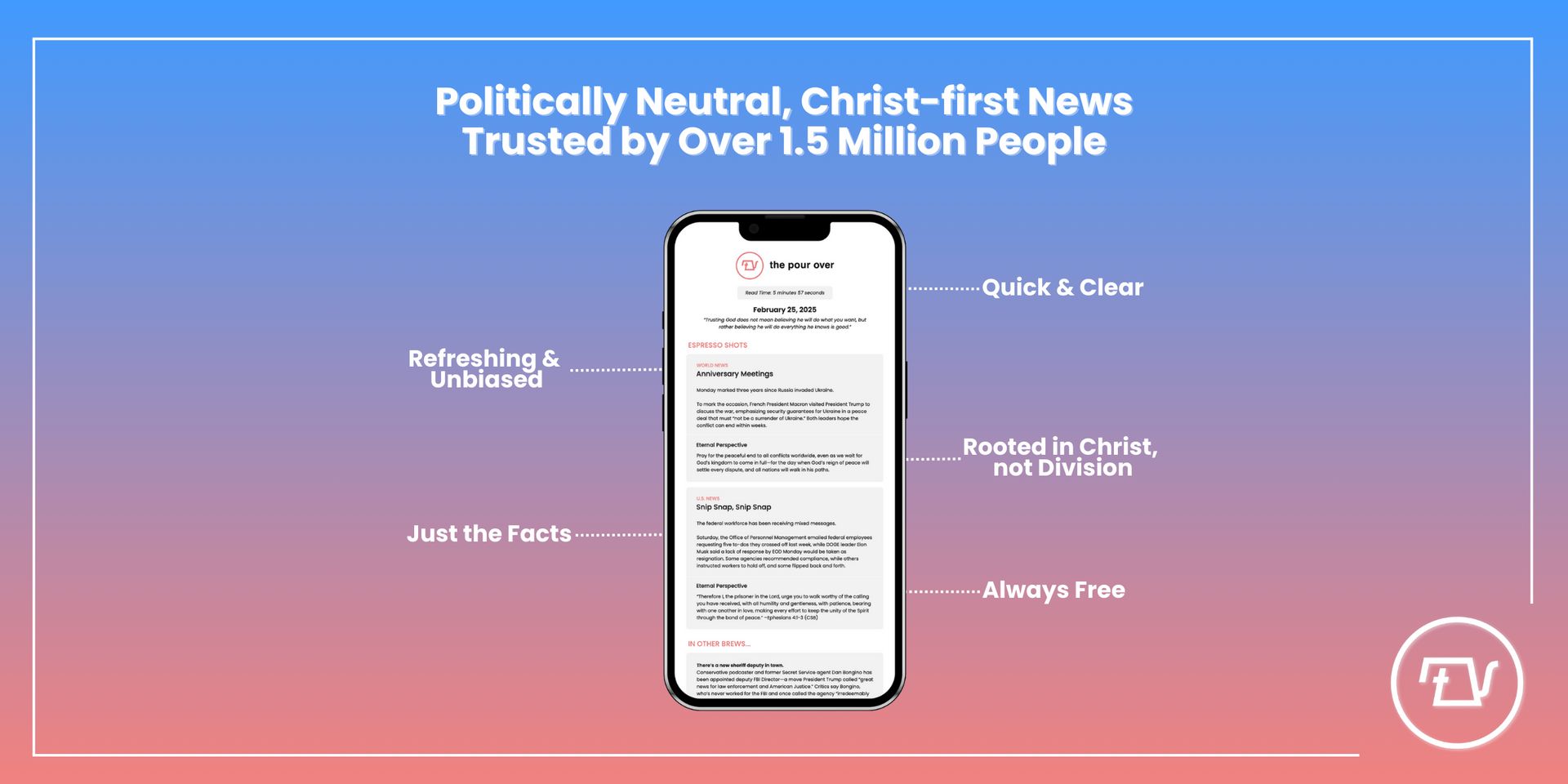
The world feels chaotic, but your news source doesn’t have to.
You can hide under a rock or spiral into the chaos… or you can subscribe to The Pour Over and get the news you need to know and the peace you crave.
Every Monday, Wednesday, and Friday, The Pour Over sends quick news summaries that are actually fun to read. Plus, each newsletter includes short biblical reminders to help you stay focused on Christ and eternity. Instead of fueling outrage or anxiety, the news becomes another prompt to rest in God and respond in faith.
Over 1.5 million Christians have ditched the doomscroll and found a better way to stay informed––Christ-first, anger-free, and (even kinda) funny.
Try it for free and check out their welcome email that’ll make you glad you did!
Why Modern Self-Care Is Failing Christians in 2026
(And What the Church Knew Long Before Has Been Forgotten)
Self-care is everywhere in 2026. Apps promise calm. Retreats promise renewal. Supplements promise balance. Advice feeds promise peace.
And yet many Christians feel more anxious, more tired, and more spiritually scattered than ever.
I began to realize something was deeply wrong when I asked myself a hard question.
If this life is all there is, then what makes Christian self-care any different from indulgence? If comfort is the goal, why not choose the easiest or most destructive version of it?
That question exposed the weakness of modern self-care. It soothes the surface but leaves the soul empty.
Scripture never separated care from surrender
Mark 8:34
“Whoever wants to be My disciple must deny himself, take up his cross, and follow Me.”
This was never about neglecting the self. It was about ordering the self toward God.
At the time, my life was full. Work demands were heavy. Family responsibilities were real. I was trying to manage stress with modern self-care ideas while still carrying the same load and the same inner pressure.
The result was predictable.
Stress responses stayed high. Sleep suffered because I stayed up too late trying to decompress. Irritability crept in. Prayer lost focus and became harder instead of easier.
Self-care was helping me cope, but it was not giving me rest.
The saints warned against comfort without meaning
St. Isaac the Syrian taught that comfort without repentance leads to restlessness, not peace. That insight landed hard for me.
I realized that what I was longing for was not relief. It was rest in something greater than myself. I needed peace that did not depend on circumstances or moods.
The early Church did not practice care apart from formation. Rest was joined to prayer. Limits were joined to obedience. Silence was joined to attention toward God. Care was never detached from meaning.
The wake-up moment
The turning point came when I saw clearly that Christianity already contained what I was searching for.
I did not need to borrow a secular self-care system.
I did not need to explore non-Christian spiritual paths.
The ancient Christian faith already had care built into it.
Prayer rules.
Fasting.
Clear limits.
Daily rhythms.
Structure.
Surrender.
These were not harsh disciplines. They were humane practices designed to protect the soul.
Science explains why self-care alone fails
Modern psychology now confirms what the Church always knew.
Relief-based coping calms symptoms briefly but weakens long-term resilience. Without purpose and structure, the nervous system stays reactive. Anxiety returns quickly. Meaning erodes.
The body needs more than comfort. It needs order and trust.
Science calls this resilience through meaning.
The Church has always called it formation.
What soul care looks like now
My life did not become easier overnight. But it became steadier.
Today, care looks less like indulgence and more like alignment.
Prayer rules that give the day structure.
Fasting that retrains desire.
Clear limits that protect attention.
Rhythms that create predictability.
Saying no without guilt.
Surrender instead of control.
These practices do not remove responsibility. They make it bearable.
Why this matters in 2026
“Hollow Wellness” comforts without conversion.
The “Cult of Hustle” exhausts without mercy.
Blue Church Living restores care that heals from the inside out.
Christians are discovering that true care does not come from treating themselves more gently.
It comes from living more truthfully before God.
And when life is ordered around Him, the soul finally rests.